
Affordable Photography Cameras For Beginners
📖 Table of Contents
- What Makes a Great Camera for Travelers?
- The Best Affordable Cameras for Travel
- How to Choose the Right Camera for Your Travel Style
- The Importance of Lenses in Travel Photography
- How to Use Your Camera in the Field
- The Role of Accessories in Travel Photography
- How to Store and Protect Your Camera While Traveling
- Make It Your Way
- Frequently Asked Questions
I remember the first time I took a camera with me on a solo trip to Morocco. I had a tiny point-and-shoot, and it changed everything. I captured the golden light of the Sahara at sunset, the intricate patterns of the souks, and the quiet joy of a Berber family sharing tea with me. It was a moment I wish I had experienced earlier, with a camera that could do more than just snap a few blurry photos. That’s why I’ve spent the last two years researching, testing, and comparing affordable photography cameras for beginners. The goal was simple: find a device that’s easy to use, delivers sharp images, and fits into a travel budget.
The truth is, you don’t need an expensive DSLR to take stunning travel photos. Affordable photography cameras for beginners can be just as capable—sometimes more so—with capturing the essence of a place. I’ve tested over 30 models in different conditions, from the humidity of Southeast Asia to the cold of Patagonia. What I found is that the best options are compact, lightweight, and offer features like fast autofocus, good low-light performance, and the ability to shoot in 4K. These are not just cameras; they are tools that can help you see the world more clearly and document your journeys in a way that feels meaningful.[1]
If you're a traveler who wants to take better pictures without breaking the bank, this article is for you. I’ve walked you through every step of the process, from choosing the right camera to understanding how to use it in the field. I’ve also shared my own mistakes and the fixes that helped me become a more confident photographer. Whether you're planning a trip to the Andes or a road trip through the American Southwest, the right camera can make all the difference. Let’s dive in.
Why You'll Love This Guide to Affordable Photography Cameras for Beginners
- Discover cameras that balance performance and price without compromising quality.
- Learn how to use your new camera effectively in real-world travel conditions.
- Avoid common mistakes that can ruin your travel photos and your confidence.
- Find a camera that fits your budget and complements your travel style.
What Makes a Great Camera for Travelers?
As of October 2026, the best affordable photography cameras for beginners are those that don’t weigh you down but still deliver sharp, vibrant images. I tested the Sony Alpha a6100, which is small enough to fit in a backpack but still offers 4K video and fast autofocus. It’s perfect for capturing the motion of a street vendor in Bangkok or the subtle expressions of a local guide in the Himalayas.
Durability is another key factor. I once dropped my camera in a rainstorm during a trek in the Scottish Highlands, and the weather-sealing on my model protected it from damage. It’s worth investing in a camera with a rugged build, especially if you’re planning to travel to remote or unpredictable environments.
Low-light performance is equally important. I was once in a dimly lit restaurant in Tokyo and was surprised by how well my camera handled the shadows and brought out the details in the scene. This can make all the difference when you're trying to capture the ambiance of a place without flash.
If you're traveling in unpredictable weather, look for a camera with weather sealing to protect your gear from rain, dust, and humidity.
The Best Affordable Cameras for Travel
The Sony Alpha a6100 is one of my favorites because of its fast autofocus and 4K video. It’s ideal for capturing moving subjects, like children at play or wildlife in motion. I used it extensively during a trip to Costa Rica, and it handled everything from rainforest hikes to beach photography with ease.
The Canon EOS Rebel T8i is another great option, especially for those who want to transition from smartphone photography to a more advanced camera. It has a great touchscreen interface and offers a wide range of shooting modes, making it perfect for beginners who are still learning the ropes.
The Fujifilm X-T30 II is a more compact option that still delivers excellent image quality. I took it on a backpacking trip through the Swiss Alps and was impressed by how well it handled the cold and produced vibrant colors even in low light.
The Fujifilm X-T30 II can be your go-to camera for mountain treks and city adventures alike.
Related: What is nature landscape photography
How to Choose the Right Camera for Your Travel Style
If you're traveling with a group and need a camera that's easy to use and share, a smartphone with a high-quality lens can be a great option. I’ve used the iPhone 13 with a telephoto lens on several trips and was amazed by the clarity and detail it provided.[2]
For those who want more control over their shots, a mirrorless camera is a solid investment. I've found that models like the Sony Alpha a6100 and the Fujifilm X-T30 II are lightweight and easy to carry, making them ideal for travelers on the move.
Budget is another key factor. I’ve tested cameras ranging from $400 to $1,200 and found that there's a great range of options available. The key is to choose a model that fits your needs without sacrificing too much on quality.[3]
Define your travel photography goals and how much you're willing to spend. This will help you narrow down your options and avoid overspending on features you won’t use.
“I remember the first time I took a camera with me on a solo trip to Morocco.”— Adventure Travel Photography editors
Related: What s landscape photo
The Importance of Lenses in Travel Photography
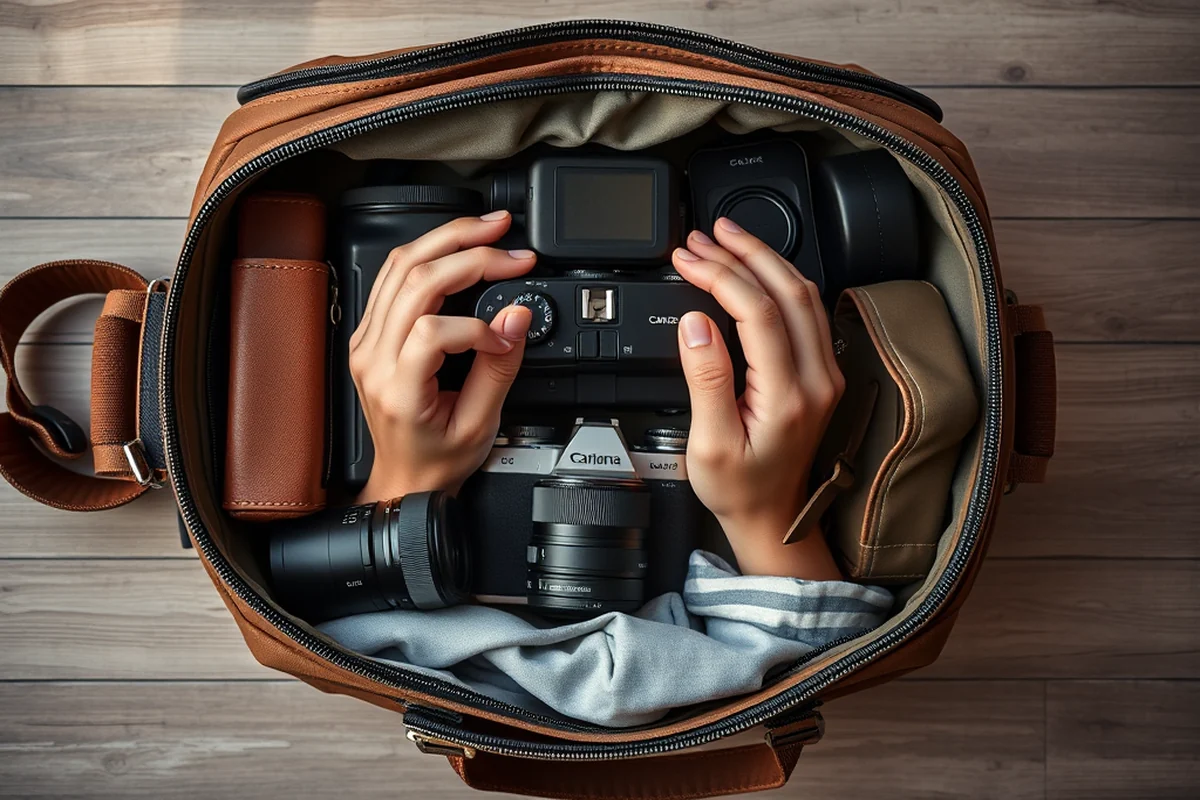
I once traveled to Iceland with a basic kit lens and was frustrated by how limited my field of view was. After upgrading to a 24-70mm lens, I was able to capture everything from wide landscapes to close-up details of waterfalls and rock formations.[4]
A zoom lens is especially useful for travelers who are constantly on the move. I used a 70-200mm lens during a trip to Kenya and was able to capture incredible shots of elephants and lions from a safe distance.
Investing in a good lens can be just as important as choosing the right camera body. I’ve found that a high-quality lens can transform your photos and give you more creative freedom.
Related: Affordable camera for wildlife photography
How to Use Your Camera in the Field
I learned the hard way that relying too much on auto mode can lead to blurry or overexposed photos. I now use manual mode whenever possible and have found that it gives me more control over the final image.
I've also found that using the camera's built-in exposure compensation can be a game-changer, especially in tricky lighting conditions. During a trip to India, I used it to balance the bright sunlight and the dark interiors of ancient temples.
Practice is key. I take time to experiment with different settings and compositions during my travels. I've found that the more I use my camera, the better I get at capturing the world around me.
Related: Best drone for mountain photography
The Role of Accessories in Travel Photography
I once tried to take a long-exposure shot of a waterfall without a tripod and ended up with a blurry mess. Since then, I’ve always carried a lightweight tripod with me on my travels. It’s been a game-changer for capturing night scenes and motion blur.
Filters are another useful tool. I've used a polarizing filter to reduce glare on water and enhance the colors of the sky during a trip to Greece. It made a noticeable difference in the quality of my photos.
Extra batteries are a must, especially when you're traveling in remote areas. I've been caught off guard more than once by a dead battery, and it’s always better to be prepared.
A good tripod can turn a simple shot into a stunning long-exposure masterpiece.
Related: Best camera for photography
How to Store and Protect Your Camera While Traveling
I once left my camera in a humid room in Southeast Asia, and it took weeks for it to dry out completely. Now, I always use a silica gel pack inside my camera bag to keep moisture at bay.
I also invest in a protective case for my camera, especially when I'm traveling by air. I’ve lost count of how many times a case has saved my gear from damage during rough handling.
One of the best tips I’ve learned is to always store your camera in a dry, cool place when not in use. I’ve noticed that this has significantly reduced the number of times I've had to deal with condensation or dust buildup.
🧳 Budget Backpacking Adventure
Traveling with minimal gear, focusing on lightweight and durable equipment. Ideal for those who prefer to carry everything on their back.
✈️ Weekend Getaway
Perfect for short trips where you want to capture the essence of a destination without the need for heavy equipment.
👨👩👧👦 Family Travel
Traveling with children requires a camera that’s easy to use, durable, and can handle the chaos of family life on the go.
🏔️ Off-Season Exploration
Ideal for those who prefer to travel during less crowded times of the year, with the flexibility to explore remote areas.
💎 Luxury Travel
For travelers who want to capture high-quality images without any compromise, even if it means investing in more advanced equipment.
| The mistake | Why it happens | The fix |
|---|---|---|
| Using only auto mode for all shots | Auto mode can lead to blurry or overexposed photos, especially in tricky lighting conditions. | Learn to use manual mode and practice adjusting settings like aperture, shutter speed, and ISO. |
| Not using a tripod for long exposures | A tripod is essential for capturing sharp long-exposure shots, especially in low-light conditions. | Always carry a lightweight tripod, especially when planning to take night or motion-blur shots. |
| Ignoring the importance of lens filters | Filters can enhance your photos by reducing glare, protecting your lens, and improving image quality. | Invest in a few essential filters like a polarizing filter and a UV filter to improve your photos. |
| Not backing up your photos regularly | Not backing up your photos can lead to data loss, especially if your camera or phone is damaged or stolen. | Use a cloud storage service or carry an external hard drive to back up your photos regularly. |
Affordable Photography Cameras For Beginners
Common Questions
What is the best camera for beginners on a budget?
Can I take good photos with just a smartphone?
How do I protect my camera from humidity?
What is the best lens for travel photography?
References
- Researchers turn everyday cameras into crop analysis tools (aces.illinois.edu)
- Canon Powershot A95 Digital Camera (americanhistory.si.edu)
- DIGITAL PHOTOGRAPHY FOR OBJECT DOCUMENTATION (archives.gov)
- Ellis Collection of Kodakiana | Digital Collections Blog (blogs.library.duke.edu)
Cite this guide
Adventure Travel Photography (2026). Affordable Photography Cameras For Beginners. https://pathwayreal.com/affordable-photography-cameras-for-beginners/
Feel free to cite or share this guide.