Walk To Camino De Santiago
📖 Table of Contents
The first time I walked the Camino de Santiago, I was breathless from the climb up the steep path to the village of Sarria. My boots were caked in mud, my backpack heavy with supplies, and my mind racing with questions about what lay ahead. Yet, the moment I reached the top, the view of the valley below — golden fields stretching to the horizon, the distant silhouette of the cathedral in Santiago — made me understand why so many people walk this ancient route. The Camino de Santiago is more than a pilgrimage; it's a journey through history, culture, and self-discovery.
The Camino de Santiago, or 'The Way of St. James,' is a network of pilgrimage routes leading to the city of Santiago de Compostela in northwestern Spain. The most popular of these is the Camino Francés, which stretches over 500 miles from Saint-Jean-Pied-de-Port in France to the cathedral where the remains of St. James are said to be buried. I walked the last 100 miles of this route, starting in Sarria, and every step was filled with a mix of physical challenge, spiritual reflection, and human connection. The keyword here is 'walk to Camino de Santiago,' and it's a journey that changes you in ways you can't predict.[1]
What makes this journey so unique is the combination of physical endurance and cultural immersion. I remember the first time I stopped in a small village along the way, where a local family invited me in for a cup of coffee and a story about their ancestors who had walked the Camino long ago. These moments of connection are what make the 'walk to Camino de Santiago' unforgettable. The trail is marked with yellow arrows and wayfinding signs, but the real guide is the rhythm of your own steps and the stories you collect along the way.
Why You'll Love This Journey
- A deeply personal and transformative experience
- Opportunities to meet fellow travelers from around the world
- A chance to immerse yourself in centuries-old traditions
- The physical and mental challenge of walking over 500 miles
What to Expect on the Camino
As of October 2026, the Camino de Santiago is a journey that tests your body and soul. I remember the first few days being the most grueling, with my legs burning and my back aching from the weight of my backpack. But as the days passed, I found a rhythm — the sound of my own footsteps, the rhythm of the sun rising and setting over the hills. Each day brought new challenges, but also new rewards.
The route is marked with yellow arrows and signs, but the real challenge is the terrain itself. I walked through forests, across rivers, through small villages, and over hills that seemed to stretch to the sky. I remember one particular day when I crossed a river that had swollen from recent rains — the water was waist-deep. I had to wade through it with my boots and backpack, my heart pounding with each step.
But it's not just the physical journey that makes the Camino de Santiago special. It's the people you meet — fellow pilgrims, locals who offer you food or a place to rest, and even strangers who become friends. One evening, I stayed in a small albergue, or shelter, where a group of travelers shared stories over a simple meal of bread and cheese. I realized that the Camino is as much about connection as it is about walking.
Before you start your journey, make sure to plan your route in advance. The Camino is broken into sections, and each one can take between 6 to 12 hours to walk. I recommend booking accommodations in advance, especially during the busy season.[2]
Part of our Camera travel guide.
The Best Time to Walk the Camino
I walked the Camino in early May, and the weather was perfect — the days were warm, the nights cool, and the landscape was bursting with color. The fields were green, the hills were dotted with wildflowers, and the sun was just the right temperature to keep you moving without burning your skin.
In the summer, the heat can be overwhelming, especially on the longer stretches of the trail. I've heard from other travelers that the heat can be unbearable, making even the most scenic parts of the Camino a struggle. In the winter, the cold and rain can make the trail treacherous, and the days are shorter, which can be a challenge for those used to longer walking hours.
If you're planning your journey, I recommend avoiding the busiest times of year, such as late July and August, when the trail is packed with pilgrims. I found that walking during the spring or early autumn allowed me to enjoy the Camino at its most peaceful and scenic.[3]
The best time to walk the Camino is when the sun is gentle, the air is crisp, and the world feels like it's moving with you.
Related: Travel guide images
What to Pack for the Camino
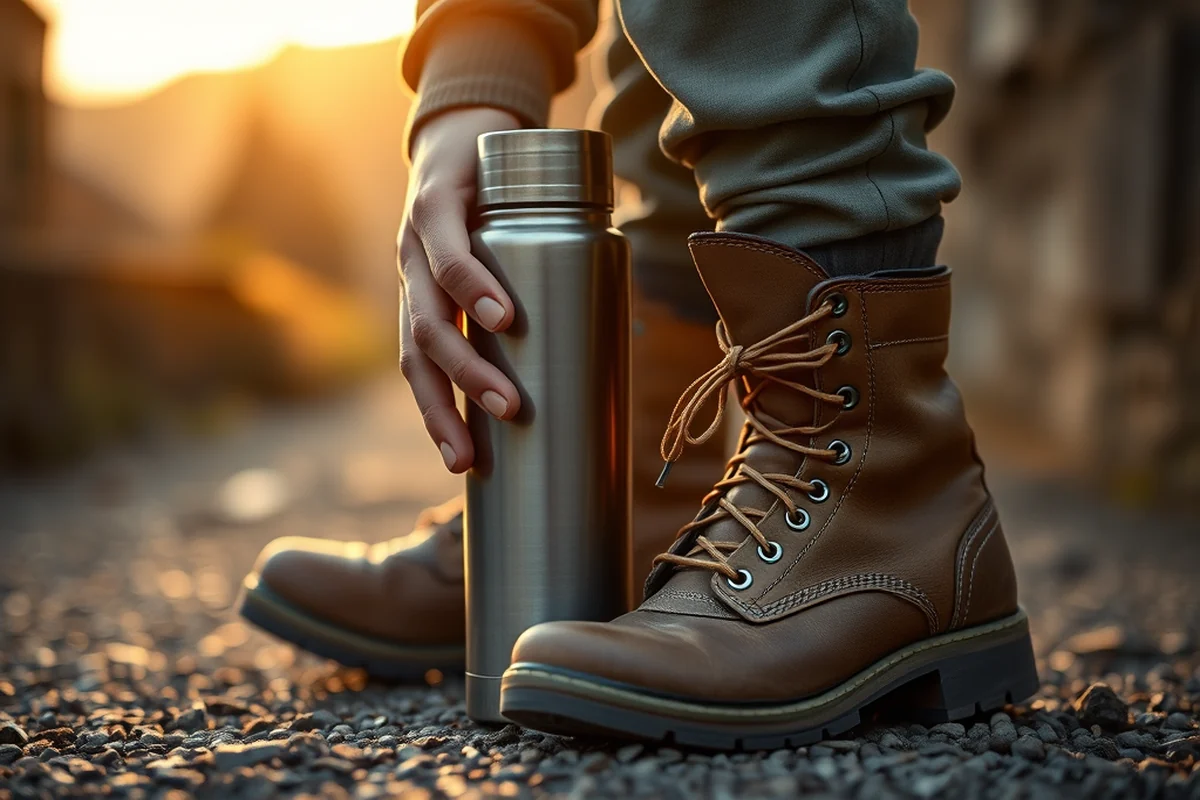
When I first set out on the Camino, I underestimated the importance of a good pair of hiking boots. My first pair were too soft and broke in quickly, leaving my feet sore and blistered. I learned the hard way that comfort is non-negotiable when you're walking for hours each day.
I recommend packing light, but also packing everything you need. A lightweight backpack with a good support system is essential. I used a 30-liter pack, which was just enough to carry my clothes, toiletries, and a few personal items. I also invested in a good sleeping bag and a compact tent, which came in handy during the nights I spent in the countryside.[4]
Other essentials include a water bottle, a rain jacket, a first aid kit, and a small towel. I also brought a small notebook and pen — something to jot down thoughts, observations, and the names of people I met along the way. These small touches made the journey more meaningful and memorable.
Invest in a pair of high-quality hiking boots and a comfortable backpack. These are the two most important pieces of gear that will determine the comfort of your journey.
“The first time I walked the Camino de Santiago, I was breathless from the climb up the steep path to the village of Sarria.”— Adventure Travel Photography editors
Related: Travel budget picture
The Spiritual Side of the Camino
I was not a religious person before the Camino, but I found myself thinking about spirituality in a way I hadn't before. There was something about walking through the countryside, seeing the same yellow arrows that had guided pilgrims for centuries, that made me feel like I was part of something larger than myself.
Along the way, I met many people who had taken the Camino for spiritual reasons. Some were Catholic, some were from other faiths, and some had no religious affiliation at all. But each of them had a story about how the journey had changed them — how it had helped them find peace, clarity, or a new direction in life.
There were moments of reflection that stayed with me — the silence of the hills, the sound of my own footsteps, the way the sun set behind the mountains. These moments made me realize that the Camino is as much about the journey within as it is about the miles you walk.
Related: Budget travel photography camera
The People You'll Meet on the Camino
I remember one night in a small village where I stayed in an albergue with a group of travelers from different countries. We shared stories over a simple meal of bread, cheese, and wine, and I realized that the Camino is a place where people from all walks of life come together in a shared experience.
There was an older woman from England who had walked the Camino multiple times, and she shared stories of her journeys with me. There was a young couple from South America who were on their first pilgrimage, and they had a way of making every moment feel magical. And there was a group of teenagers from Spain who were walking the Camino as a school trip — they were full of energy and curiosity, and they made the journey feel like an adventure.
These connections are what make the Camino so special. The people I met along the way became some of my most memorable travel companions. They shared their stories, their fears, their hopes, and their dreams — and I, in turn, shared mine.
Related: Cheap camera for travel photography
The Beauty of the Camino
The Camino takes you through a variety of landscapes, each with its own unique beauty. I walked through lush green hills, across rivers, and through small villages that seemed to have been untouched by time. The views from the top of the hills were breathtaking — the golden fields of the countryside stretching out before me, the distant silhouette of the cathedral in Santiago.
I remember one day walking through a forest where the trees were so tall that the sunlight barely reached the ground. It felt like walking through a cathedral of nature, and I could hear the sound of birds singing in the distance. Another day, I climbed a hill and saw the entire valley below me, the sun setting behind the mountains in a blaze of orange and gold.
These moments of natural beauty are what make the Camino so unforgettable. Every step you take is not just a step on a path, but a step through a living, breathing landscape that has inspired travelers for centuries.
The Camino is not just a path — it's a journey through the soul of Spain.
Related: Travel photo book
The End of the Journey
The final stretch of the Camino is the most emotional for many pilgrims. As I approached Santiago, my legs were tired, my backpack was heavy, and my heart was full of emotion. I remember the moment I saw the city of Santiago for the first time — the cathedral stood out against the horizon, and I felt a deep sense of peace and fulfillment.
Reaching the cathedral and receiving the Compostela certificate was a moment I will never forget. I had walked over 100 miles, met incredible people, and experienced the beauty of Spain in a way I never could have imagined. The Compostela is a certificate of completion, but it's also a symbol of the journey you've taken and the person you've become.
Looking back on the journey, I realized that the Camino was not just about walking — it was about transformation. It was about the people I met, the landscapes I saw, and the stories I collected. And as I left Santiago, I carried with me not just memories, but a new understanding of myself and the world around me.
💰 Budget Camino
Travel the Camino on a shoestring with a focus on albergues, shared accommodations, and local meals.
⏳ Long Weekend Camino
Take on a shorter section of the Camino, such as the last 100 miles, over a long weekend with minimal planning.
👨👩👧 Camino with Kids
Make the Camino a family adventure with kid-friendly accommodations and stops along the way.
🍂 Off-Season Camino
Experience the Camino during the off-season with fewer crowds and lower accommodation prices.
💎 Luxury Camino
Travel the Camino in comfort with private accommodations, guided tours, and gourmet meals.
| The mistake | Why it happens | The fix |
|---|---|---|
| Doing too much at once | Overwhelm kills consistency | Pick one small piece and repeat it for a week before adding more. |
| Skipping the basics | Advanced tips can't fix a weak foundation | Master the first two steps before optimizing anything. |
Walk To Camino De Santiago
Common Questions
Do I need to be in good physical shape to walk the Camino?
Can I walk the Camino as a solo traveler?
How much does it cost to walk the Camino?
What is the Compostela certificate?
References
- El Camino de Santiago - Duke Alumni (alumni.duke.edu)
- Grinnellian Adventures: Walking the Camino de Santiago (alumni.grinnell.edu)
- El Camino de Santiago: Walking in Northern Spain | Harvard Alumni (alumni.harvard.edu)
- El Camino de Santiago: A Walking Tour In Northern Spain (alumni.umich.edu)
Cite this guide
Adventure Travel Photography (2026). Walk To Camino De Santiago. https://pathwayreal.com/walk-to-camino-de-santiago/
Feel free to cite or share this guide.